You open an app to track who bought the wine. It tracks a bit more than that.
Most bill-splitting apps are free. But there is a hidden cost to that.
Case 1: Settle Up and ad trackers
Settle Up for example runs ads in its free tier. In order to run ads, apps need the so-called "trackers": tools that track the behavior of the user in order to create their profile and be able to target them better with ads.
An independent APK analysis by Exodus Privacy (March 2026, v11.0.2252) found multiple trackers in the app - including Google AdMob and Facebook Ads, two dedicated ad services. Your expense behaviour can feed into the two largest advertising networks in the world.
But ads are merely a symptom of a broader approach to privacy. SettleUp requests also access to your whole contact list and it's unclear why. Invitations to join a group are by web link, so there is no reason to request the full contact list of the user.
Keep in mind that Facebook trackers are documented to capture unrelated behavior information for audience matching, for example their flight searches.
Case 2: Tricount, when your expense app is owned by a bank
Tricount is one of the most popular bill-splitting apps in Europe. In 2022, it was acquired by Bunq, a Dutch neobank. Bunq is now the data controller for all Tricount user data.
This means your expense history - who you travel with, how much you spend, in which currencies - is held by a bank that also wants to sell you a credit card. Tricount's UI already promotes Bunq's own financial products.
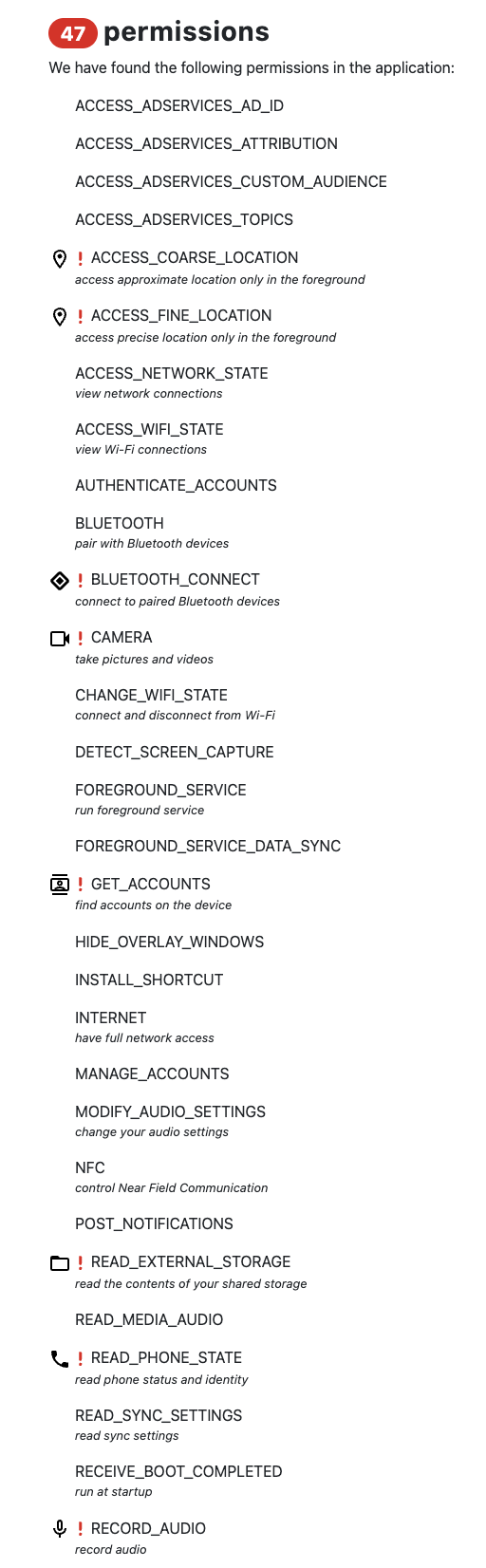
A detailed permission audit by Exodus Privacy (January 2026) found multiple dangerous and special permissions in the app - including access to your precise location, microphone, camera, and device accounts. None of these are necessary to track who owes what for dinner.
In 2025, Bunq received a €2.6 million fine from the Dutch Central Bank for inadequate customer monitoring and due diligence - a compliance failure that raises broader questions about how carefully this organisation handles the data it holds.
Other apps in the space
But it's not just these two. Here's how other popular bill splitting apps stack up, according to the latest independent audits by Exodus Privacy
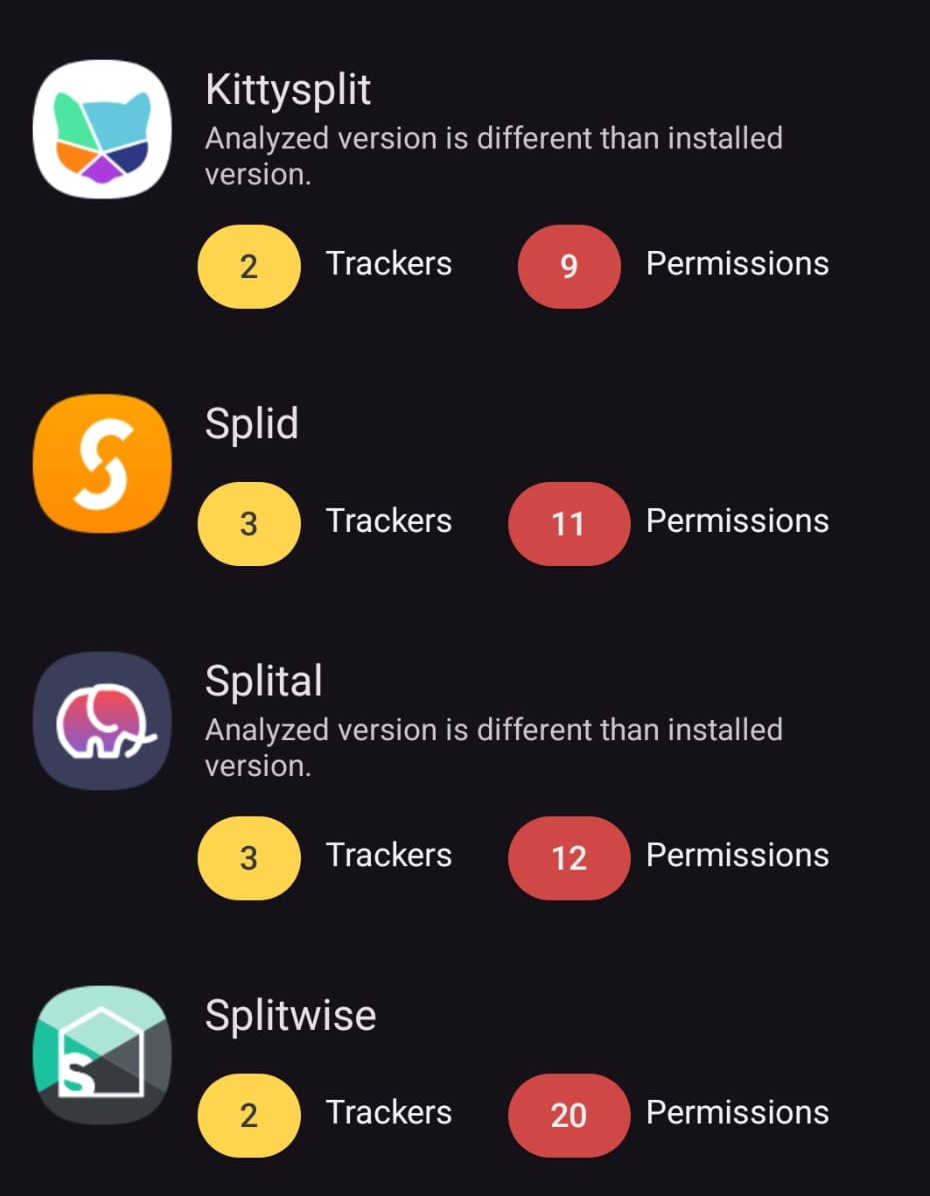
Splitwise, Splid, and even newer entrants like Splital, all have some trackers and multiple permission requests.
What Settlify does differently
Instead of running ads and exposing users to these tracking behaviors, Settlify charges a small one-time fee. For a few cents per person, there are no ad trackers and no dangerous permissions.
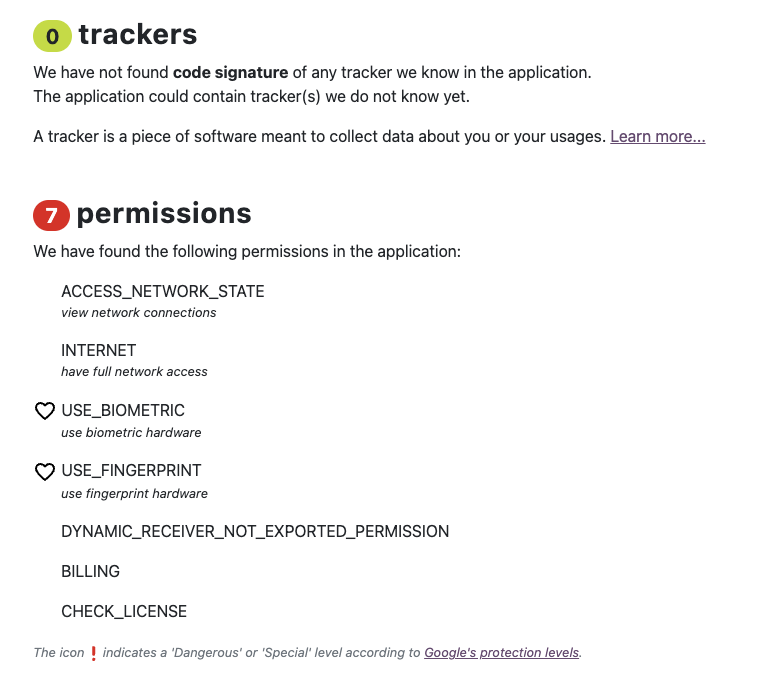
This is the independent report from Exodus Privacy - only what's needed for unlocking the screen, login and pay with Play and App Store. Zero trackers.
You can read exactly what we collect - and what we don't - in our Privacy Policy.
A different take on privacy
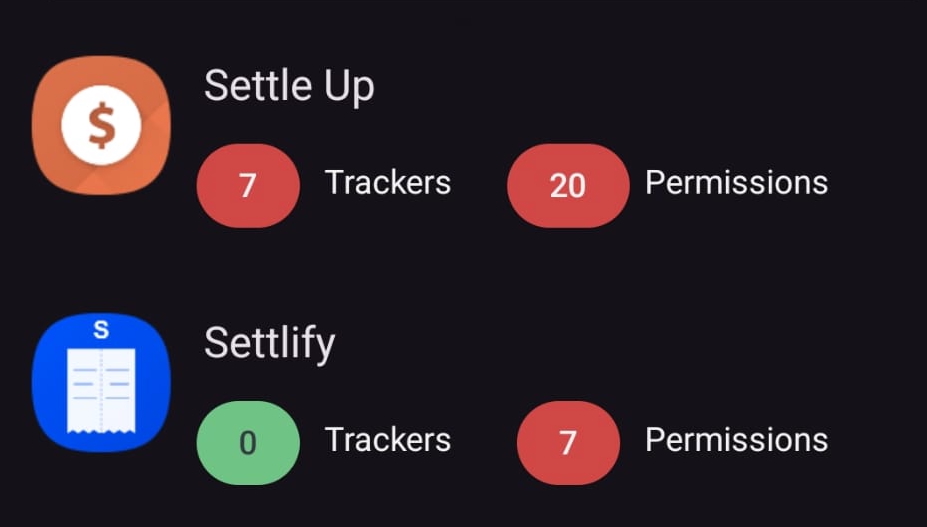
The audits above are public and independently maintained. SettleUp embeds two major ad networks. Tricount is owned by a bank that has already received a compliance fine and requests many sensitive permissions for no reason. The others follow similar patterns.
Settlify has a different approach with zero trackers and no unnecessary permissions. That is not a feature added on top of the product — it reflects a deliberate stance that shapes many of the product and business decisions. No ads means no need to track behaviour. A one-time fee means no incentive to harvest data for retention.
We don't think a utility that helps friends split group expenses needs to know who your contacts are, where you've been, or which ads might resonate with you. A bill-splitting app should do one thing and go away quietly. Settlify is built around that idea.
